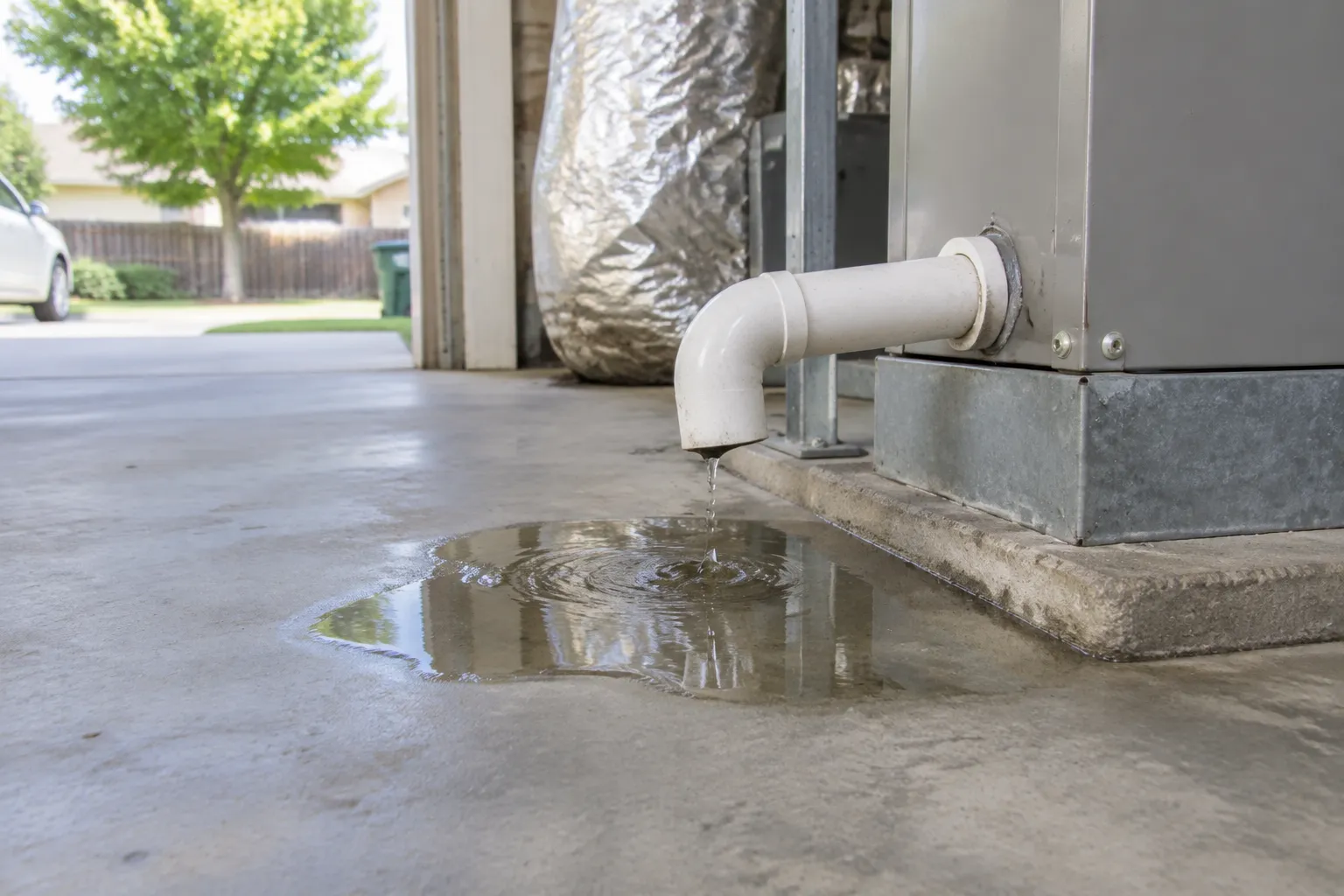
Two kinds of leak get called an AC leak, and they cost very different amounts. Water around the indoor unit is most often a clogged condensate drain, which is usually a small repair priced by the part and the labor. A refrigerant leak costs more, at $200 to $1,500 to repair, per Fixr's AC repair guide (January 2026). This page prices both, plus the repairs that follow when leaks come with other symptoms. For noises, smells and cycling problems, see AC leaks, noises and smells. All figures are national guides, not Modesto quotes.
What is leaking, and how much will it cost?
Start with what you see. The table sets out the common leaks and the published national range for each, mostly from Fixr's AC repair guide (January 2026).
| What is leaking | Likely repair | Published national range |
|---|---|---|
| Water at the indoor unit | Clear a clogged drain line | Depends on the labor; ask for it itemized |
| Water from a frozen coil | Thaw, find the cause | Depends on the cause |
| Refrigerant (oily residue, low cooling) | Leak repair (recharge alone $100 to $600) | $200 to $1,500 |
| Coil leak | Evaporator coil replacement | $400 to $2,700 |
Angi's 2025 Freon guide says most people pay $250 to $1,600 for a refrigerant leak. The two sources are close, so a quote far above that range for a simple leak is worth a second opinion.
Why is my AC leaking water?
Carrier lists three common causes: a clogged condensate drain line, a frozen evaporator coil melting into the drain pan, and a damaged drain pan. Carrier says it is not recommended to use the AC while it is leaking water, so switch it off and look for water damage around the unit.
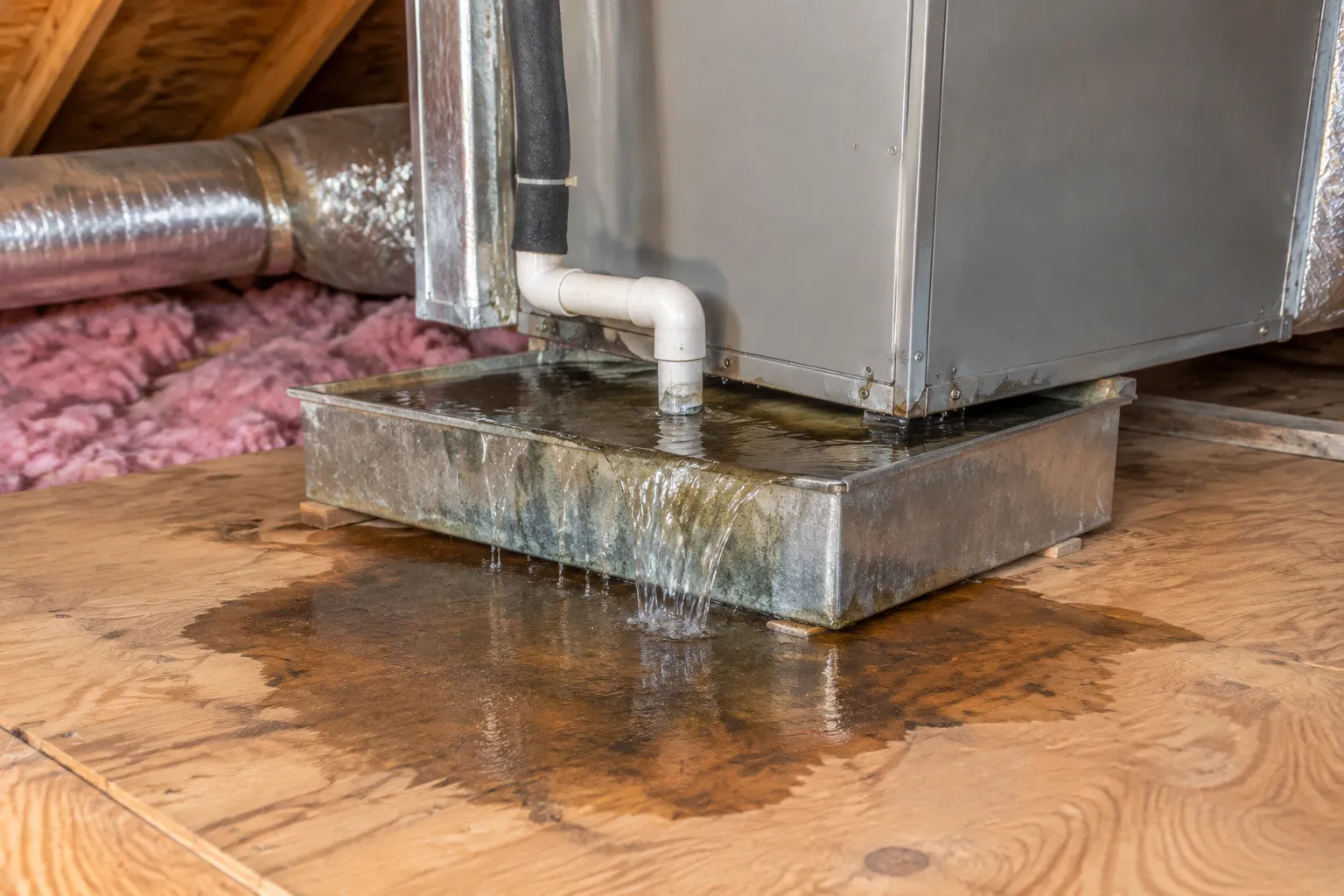
Trane says a frozen coil usually comes from restricted airflow, such as a dirty filter, blocked return vents or a dirty coil, and the other main cause is low refrigerant. Both can show up together, so a good diagnosis checks airflow before it charges for refrigerant.
What can I check myself before I call?
Safe checks only: replace a dirty filter, make sure the vents and returns are not blocked, check the thermostat is set to cool and that its batteries are fresh, and look at the drain area for standing water. If the coil is frozen, switch the thermostat to off and let it thaw. Do not chip the ice, because Trane warns that can damage the coil.
Do not open the cabinet. Electrical parts, refrigerant lines and the drain pan inside the unit are for a pro. Clearing debris around the outdoor unit is also fine. That is where DIY stops.
How much does it cost to repair a refrigerant leak?
Fixr lists $200 to $1,500 for leak repair (January 2026), with a recharge alone at $100 to $600. The size of the bill follows three things: where the leak is, how much refrigerant is needed and what type your system uses. Refrigerant is priced by the pound and varies by source, so the quote should show the pounds added and the price per pound.
Refrigerant is not used up in normal operation. Carrier says low refrigerant usually points to a leak, so a top-up without finding the leak may only delay the next call. Under EPA rules only technicians with EPA Section 608 certification, or their employers, may buy refrigerant for stationary AC equipment, and knowingly venting it is prohibited.
Searches for AC line, hose, condenser and unit leak costs all lead to the same range. A line or condenser leak lands in the leak repair range. A coil replacement lands in the higher coil range. Ask the business where the leak is, and how it was found.
What do other leak-related repairs cost?
When a leak is a symptom, the repair may be elsewhere:
- Drain pan or drain line. The cost depends on the part and the labor, so ask for them on separate lines. We found no published national price for a pan replacement alone.
- Capacitor. $100 to $400. See capacitor replacement cost.
- Compressor. Published guides vary widely; Fixr lists compressor work at $600 to $3,000 (January 2026), a major repair. Compare to replacement HVAC cost.
- Thermostat. Fixr lists replacement at $150 to $500. See thermostat replacement cost.
A rooftop unit that leaks follows the same causes. The difference is access, which may mean extra time. We found no published price specific to rooftop units.
What about a furnace leaking water, or short cycling?
A furnace that leaks water is usually a high-efficiency model with a condensate drain, since these furnaces produce water as they run. Industry guides note that a clogged condensate trap can also keep the pressure switch open and stop the furnace from starting. We found no published price for a furnace water leak on its own, so ask for the part and labor on separate lines.
Short cycling is when a system turns on and off in quick bursts. Carrier lists a dirty filter, low refrigerant, a faulty thermostat, an oversized system and electrical parts as causes, and says a system that may be short cycling should be inspected by an HVAC professional. So the cost of short cycling is the cost of whichever cause turns out to be real, and the ranges above apply. For the heating side, see furnace short cycling.
What pushes the price up or down
- Cause. Drain line, coil, refrigerant circuit or electrical part.
- Time. Water damage grows with time, and emergency calls often cost more (Fixr lists $150 to $300 per hour, or two to three times normal rates).
- Refrigerant type. R-22 systems cost the most to recharge.
- Access. Attics, closets and rooftops take longer.
- Warranty. Under warranty you may owe only labor and refrigerant.
- Diagnostics. A service call, which Fixr lists at $75 to $250, may be applied to the repair.
A noisy AC is a separate question. We found no published price for noise alone, and the cause could be a motor, a loose part or the compressor. Ask the business to name the part before it quotes a price.
How to compare quotes
California requires a CSLB license for labor and materials of $1,000 or more. Check the license at cslb.ca.gov or call 800-321-CSLB (2752); the HVAC class is C-20. Then compare the diagnosis, the price per part and labor, and whether the quote fixes the leak or only refills the refrigerant.
Quotes come from independent local businesses. Use the price request form to compare, or return to the home page.
Questions people ask
How long does an AC leak repair take?
No published guide we used gave a time. Clearing a drain line is shorter than finding and fixing a refrigerant leak, which needs testing, repair and a recharge. Ask the business for an estimate, and ask whether you can keep the AC off until it is done.
What should I ask before I hire someone to fix an AC leak?
Ask where the leak is and how it was found, whether the price covers repair or only a recharge, what refrigerant your system uses, and whether the service call is credited. Ask what warranty covers the repair, and for the CSLB license number so you can check it at cslb.ca.gov.
Do I need to be home for the repair?
Someone usually needs to give access to the indoor unit, the outdoor unit and any attic or closet where the leak is. Ask the business whether it needs you on site, and clear the area around the units first so work is not delayed.
Can I keep running my AC with a leak?
Carrier advises against running the AC while it is leaking water. For a suspected refrigerant leak, a unit that struggles to cool is worth switching off until a pro looks at it. For same-day help in a heat wave, see emergency HVAC repair.
Sources
- Fixr AC repair guide, January 2026
- Angi published AC Freon leak guide, 2025
- Carrier, why is my AC leaking water
- Carrier, AC short cycling
- Trane, frozen evaporator coil
- EPA, Section 608 refrigerant sales restriction
Last updated