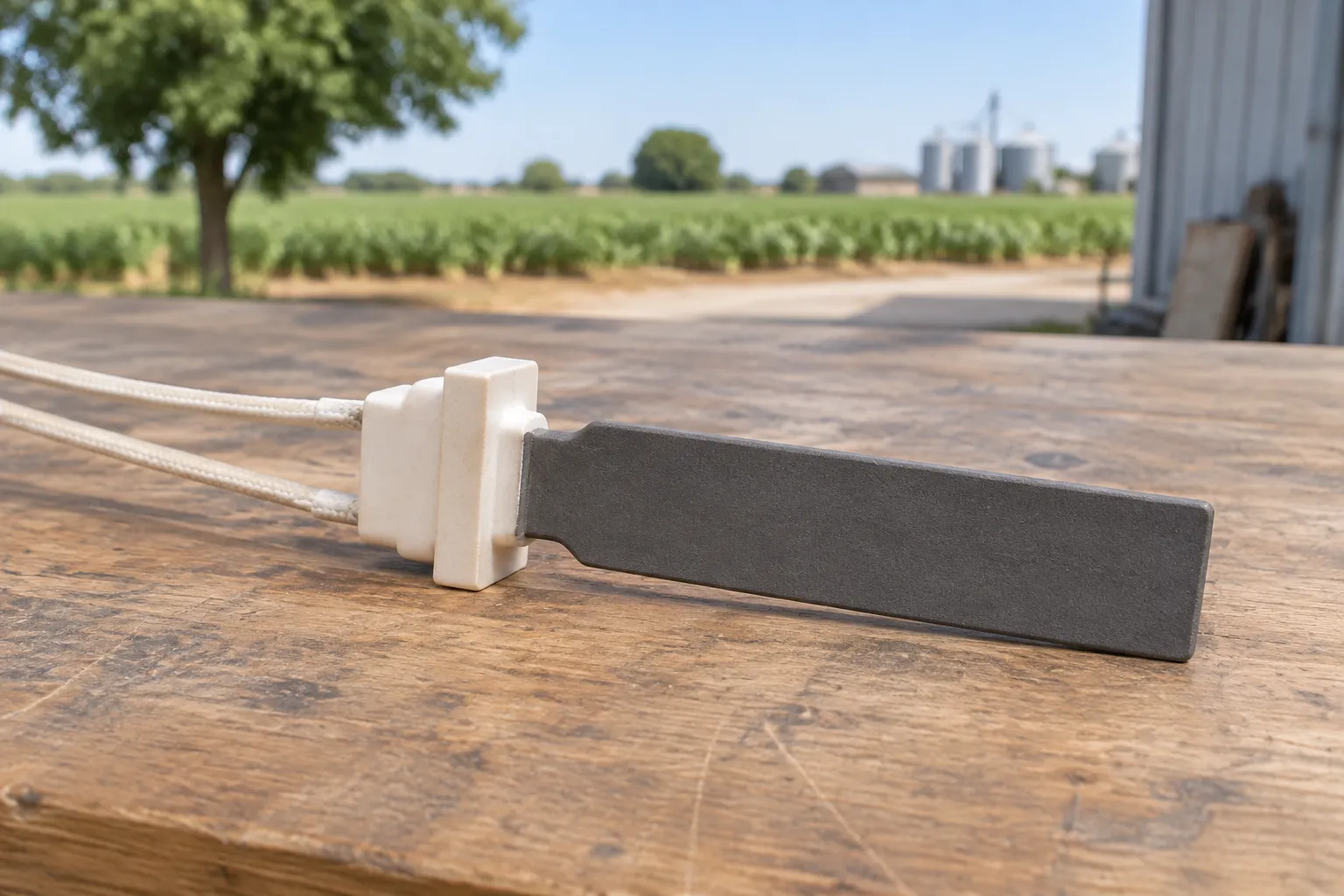
A gas furnace igniter typically costs $96 to $178 to replace, including the service call and the part, according to the Fixr furnace repair guide checked Nov 2026. A flame sensor is cheaper, at $68 to $127. If your furnace is blowing cold air or not starting, the igniter or the flame sensor is often where a technician begins. For the full ignition walk-through, see furnace not heating or won't start. All prices are national guides, not Modesto quotes.
How much does it cost to replace the igniter on a gas furnace?
Fixr lists $96 to $178 for an igniter, service call included. The part is a small piece, so most of that is the visit. Labor on the same page runs $87 to $162 per hour, and Fixr lists a service call alone at $75 to $250.
An igniter is the part that lights the burners. On many gas furnaces the igniter glows to light the gas. If it never glows, the igniter or a part upstream may have failed. If you searched for furnace heating element replacement cost, note that an electric furnace uses heating elements instead of gas burners, and we found no published national price for them alone. Ask the business to price the element and the labor on separate lines.
What do the other no-heat parts cost?
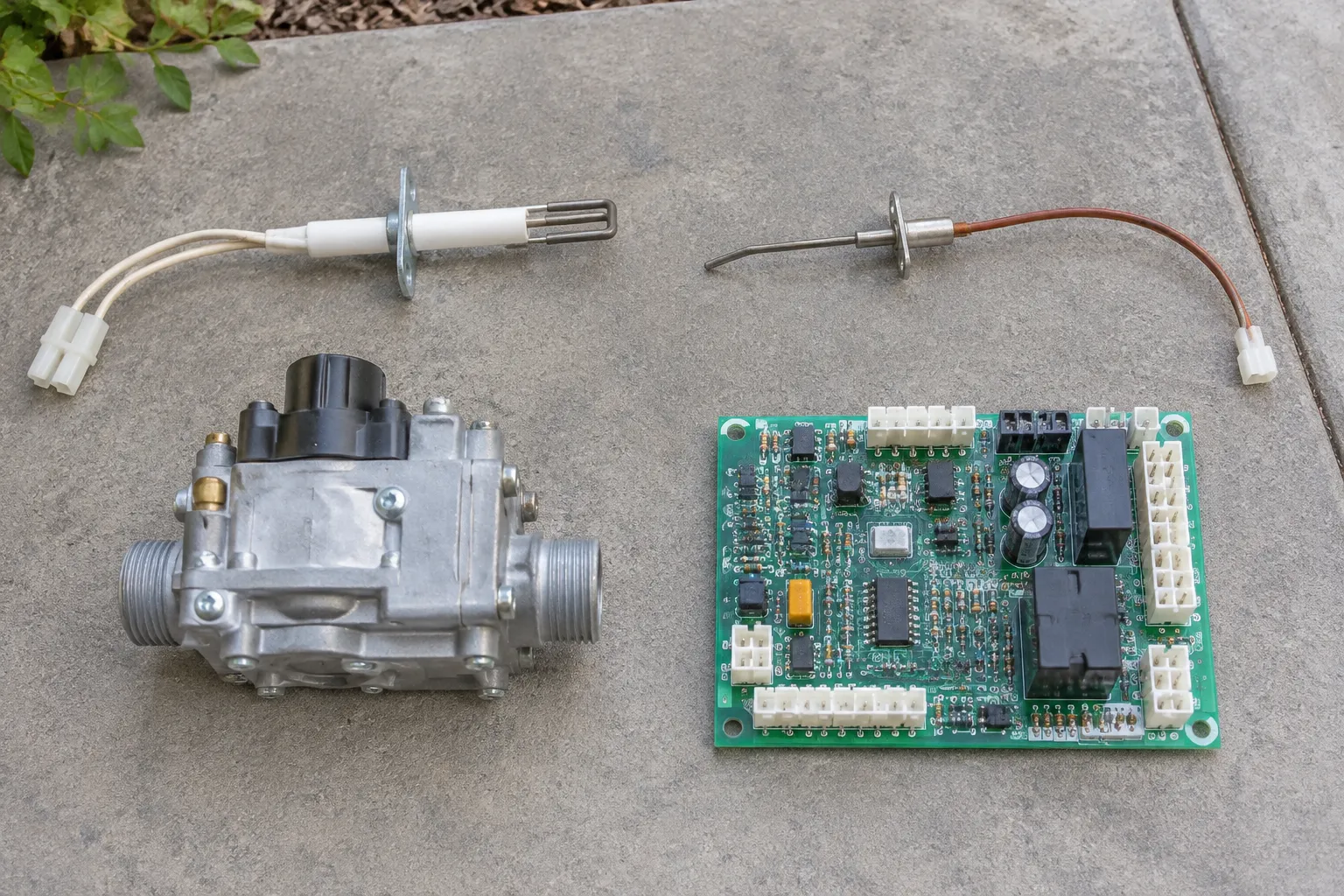
The table shows published national figures from the Fixr furnace repair guide, checked Nov 2026.
| Part | Published national range |
|---|---|
| Flame sensor (call plus part) | $68 to $127 |
| Igniter (call plus part) | $96 to $178 |
| Limit switch | $66 to $122 |
| Control board | $390 to $725 |
| Blower motor | $562 to $1,045 |
| Heat exchanger | $1,346 to $2,673 |
Pressure switch and draft inducer motor are not listed on that Fixr page, and the figures we found for them came from mixed sources. We are leaving out a specific price. Ask the business for the part cost and the labor on a written quote. For the motor side, see furnace inducer motor repair and furnace pressure switch repair.
We found no published national price for a thermocouple. If a quote names one, ask which part it is, why it failed and whether the flame sensor was tested first.
Why is my furnace not heating the house?
The ignition sequence runs in order: the inducer starts, the pressure switch closes, the igniter heats, the gas valve opens, a flame lights, the sensor proves the flame, and the blower starts. Industry troubleshooting guides and furnace manuals describe these clues:
- The igniter never glows. The igniter or the pressure switch is the usual suspect.
- It glows, then no flame. Think gas supply or the gas valve.
- A flame lights, then dies in seconds. A dirty flame sensor is a common cause.
- A high-efficiency unit will not start. A clogged condensate trap can keep the pressure switch open.
- It tries three times and locks out. Many furnaces lock out after a few failed ignition tries and flash a code; check the manual for the count.
Treat this as a general explanation, not a diagnosis. Only a technician can say which part has failed in your furnace. A furnace that is not heating well, or not heating enough, can also be caused by a dirty filter or a thermostat problem.
What can I check before I call?
You can safely check the basics: the thermostat is set to heat and the temperature is above the room's, the batteries in the thermostat are fresh, the breaker for the furnace has not tripped, and the filter is clean. Trane advises changing filters every 1 to 3 months.
Stop there. Gas valves, gas supply, control boards and anything inside the cabinet are for a pro. We do not give gas-leak steps on this page. If you smell gas or a carbon monoxide alarm sounds, the Consumer Product Safety Commission says to move outside to fresh air right away, call 911, and not re-enter until responders say so.
What pushes the price up or down
- Which part failed. The sensors and igniter sit at the bottom. The heat exchanger sits at the top.
- Time of day. Evenings, weekends and holidays often add a surcharge.
- A cracked heat exchanger. This raises a safety issue as well as a cost. Compare against furnace replacement cost when it fails on an older unit.
- Diagnostics. The service call fee, which Fixr lists at $75 to $250, may be applied to the repair.
- Access. Furnaces in attics or tight closets take longer.
First cold snaps of autumn and winter bring more heating calls in the Central Valley, with January highs averaging near 56 F and lows near 39 F per Climates to Travel (1991 to 2020).
California requires a CSLB license for labor and materials of $1,000 or more (800-321-CSLB (2752); HVAC is class C-20). A small igniter job may fall below that, but check the license at cslb.ca.gov regardless. Quotes come from independent local businesses. Use the price request form to compare, or return to the home page.
Questions people ask
How long does a furnace igniter replacement take?
No published guide we reviewed gave a time for an igniter swap. It is a small part on most furnaces, and the visit is mostly the diagnosis. Ask the business for an estimate when you book, and ask what happens if the igniter turns out not to be the cause.
What should I ask before I hire someone to replace a furnace igniter?
Ask what test showed the igniter is the fault, whether the price includes the part and the service call, whether the fee is credited toward the repair, and what warranty covers the part and the labor. Ask for the business's CSLB license number and check it at cslb.ca.gov.
Do I need to be home for the repair?
Someone usually needs to let the technician in and show where the furnace is. Clear the space around it and confirm access to the filter and thermostat. Ask the business whether it needs an adult on site for the whole visit, and whether you will approve the price before work starts.
Can I replace a furnace igniter myself?
The sources we used say gas valve, gas supply and control board problems usually need a technician, and we do not recommend a DIY swap. A furnace is a gas appliance, and the CPSC urges a professional inspection each year. Stick to filters, thermostat settings and the breaker.
Sources
- Fixr furnace repair cost guide, updated Aug 2025, checked Nov 2026
- Industry furnace troubleshooting guides and manufacturer manuals, checked Nov 2026
- CPSC, carbon monoxide fact sheet
- CSLB, what kind of contractor do you need
Last updated