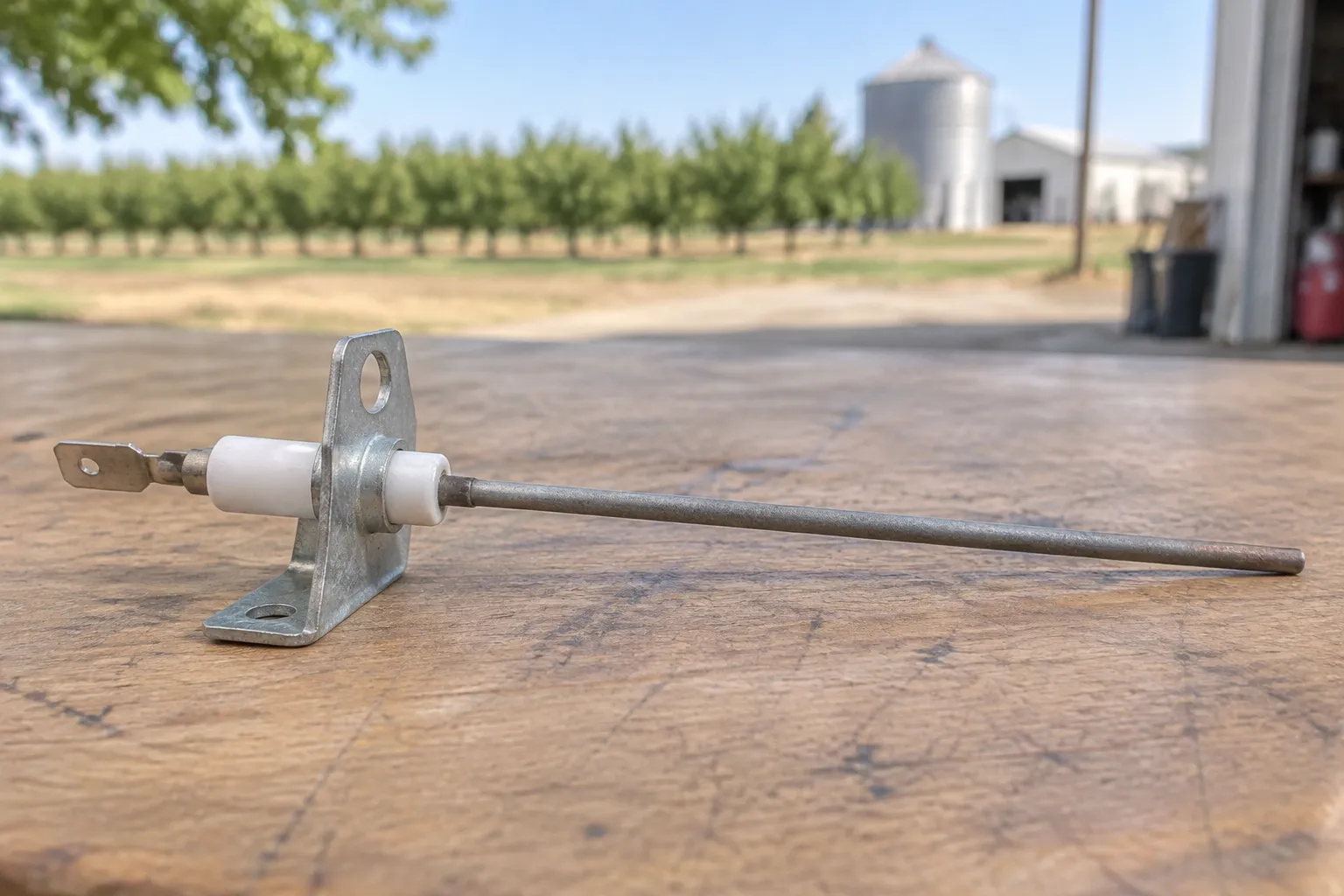
A furnace flame sensor is a thin metal rod that sits in the burner flame and confirms the gas is actually burning. If it cannot sense a flame, the control board closes the gas valve. A dirty or worn sensor is a classic reason a gas furnace lights, runs a few seconds and then shuts off. Published prices for the repair run about $68 to $127 including the service call.
This page is about that one part. For the full picture of furnace problems and replacement, start with furnace repair in Modesto. If you want local specialists to price the job, send the quote request.
How do I check a flame sensor?
You check a flame sensor by watching how the furnace behaves, not by opening the cabinet. Normal ignition runs in a set order: the inducer fan starts, the igniter heats, the gas valve opens, the burner lights, and the sensor confirms the flame. If the flame appears and disappears within a few seconds, the sensor is a prime suspect.
Industry troubleshooting guides and furnace manuals give a simple split:
| What happens | What it usually points to |
|---|---|
| No igniter glow | Igniter or pressure switch |
| Igniter glows, no flame | Gas supply or gas valve |
| Flame lights, then dies in seconds | Dirty or failed flame sensor |
| Furnace tries a few times, then locks out (check the manual for the count) | Any of the above, often with a flashing code |
A technician measures the sensor with a meter that reads its tiny current signal. A sensor can look clean and still read weak. This is the reading a specialist checks, and it is what separates a part that needs cleaning from one that needs replacing.
What you can do safely: check the thermostat is calling for heat, confirm the furnace has power, and look at the filter. A flashing light on the control board is often a code. Write down the pattern and tell the specialist, because it speeds up the diagnosis. Do not remove burner covers or touch the gas valve. Furnaces are a carbon monoxide risk if something is wrong, and the U.S. Consumer Product Safety Commission advises professional inspection of fuel-burning heating systems every year.
What is a flame detector?
A flame detector is any device that confirms a flame is present. In a home furnace, it is the flame sensor, usually a rod that senses a tiny electrical signal passing through the flame. The control board needs that signal to keep the gas valve open. No signal, no heat. It is a safety feature, not a convenience.
The idea is the same as industrial flame detectors, which are widely used to stop fuel flowing when nothing is burning. In a furnace it matters because unburned gas should never keep flowing. The shutoff is the furnace working as designed, so a sensor that trips quickly is not itself dangerous. The real danger is bypassing it, which is why you should never jumper or disable a flame sensor.
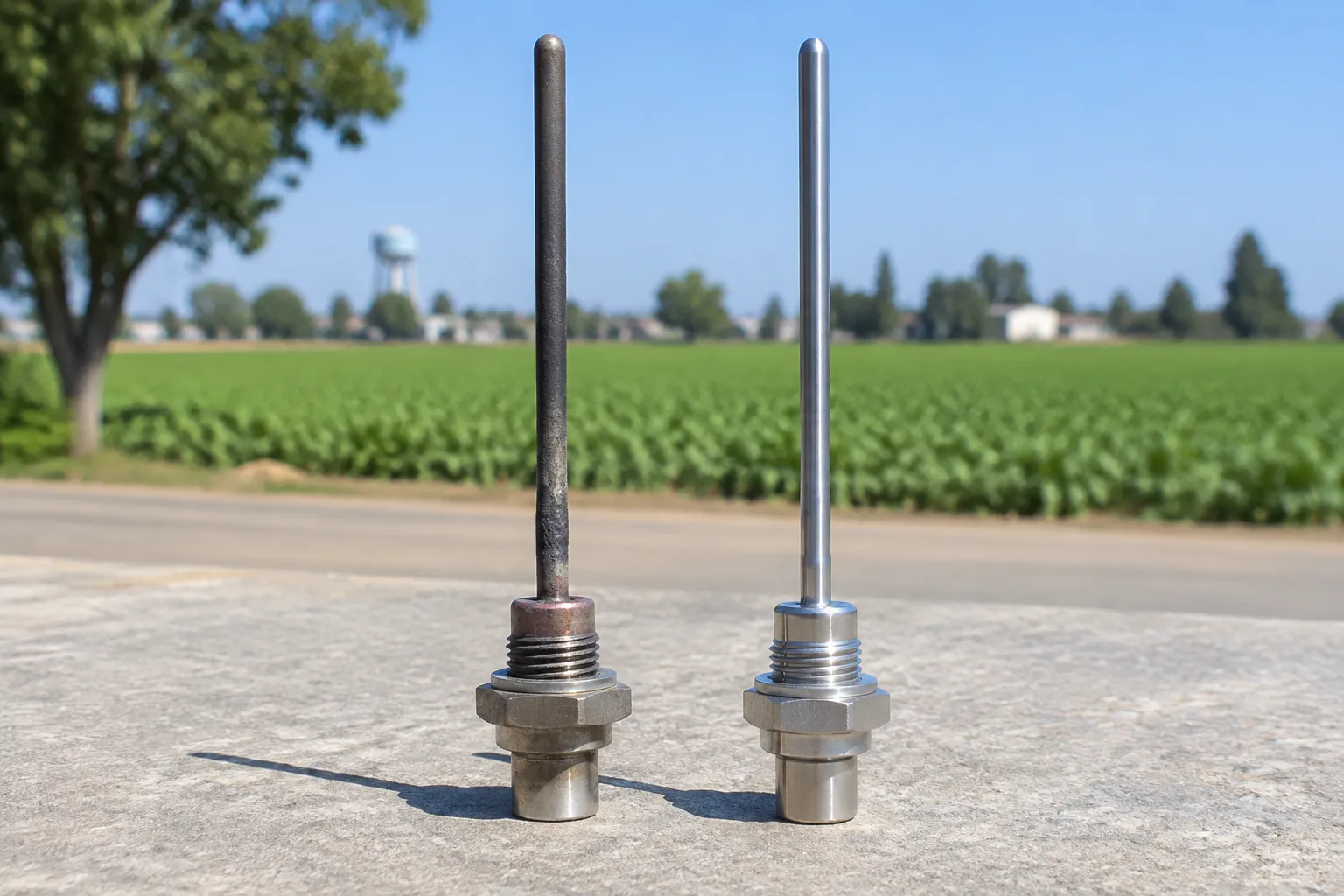
Over time, a thin film builds up on the rod and weakens its signal. That is why the same furnace can work for years, then start shutting off one cold evening in the first weeks of heating season.
What are the different types of flame sensors?
Most residential gas furnaces use one of two designs. A flame rectification sensor is the common metal rod. Older equipment may use a thermocouple or a similar heat-based device tied to a standing pilot. Newer furnaces with electronic ignition almost always use the rod design, which is why it is the one that gets dirty.
Each type has the same job and a different failure pattern. A thermocouple on a standing pilot loses signal when it wears out or when the pilot flame is weak. A rod sensor loses signal when it is coated, bent, cracked or mounted loosely. Replacement parts are not interchangeable, so the specialist needs your furnace brand and model number from the data plate.
If your furnace is older and you are not sure which design it uses, take a photo of the data plate and the front panel label. That is enough for most specialists to quote a part. The page on furnace igniter replacement cost covers the part right next to the sensor, since the two are often diagnosed in the same visit.
Can I replace a flame sensor myself?
Replacing one involves power and gas equipment, so the safest answer is to leave it to a specialist. The part itself is inexpensive, but it sits next to the burner and gas valve, and a wrong diagnosis can hide a bigger problem such as a failed pressure switch or inducer motor.
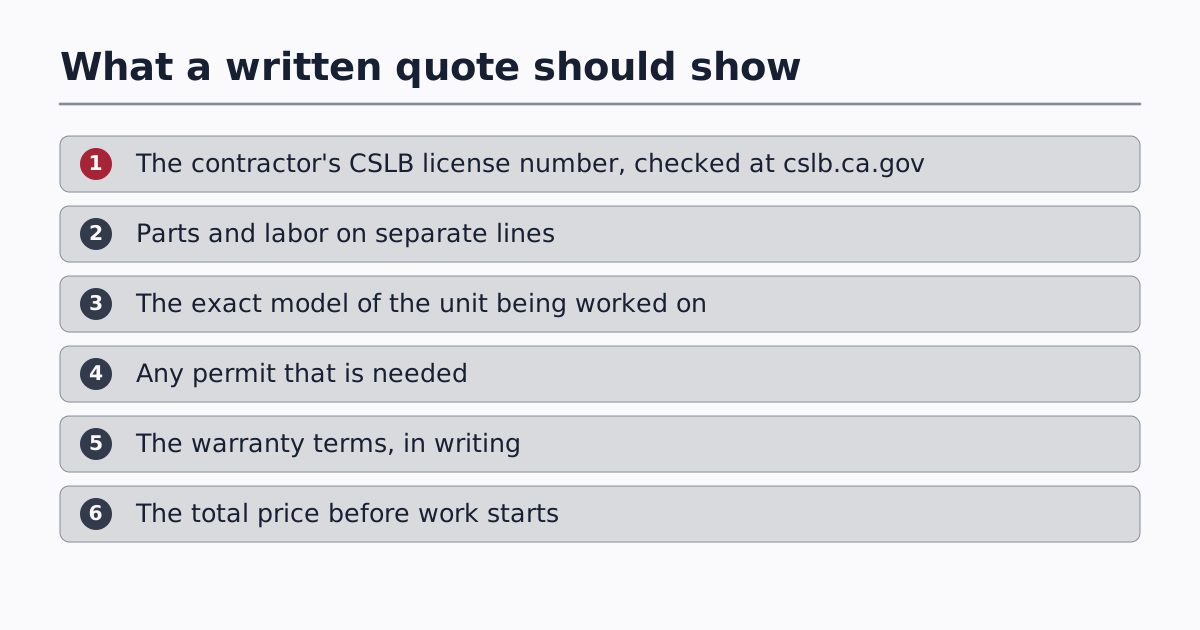
California law requires a CSLB license for work worth $1,000 or more in labor and materials. A flame sensor visit usually costs far less than $1,000, so the dollar threshold may not apply, but it is still sensible to ask for a license number. The CSLB C-20 classification covers warm-air heating systems. Check any contractor at cslb.ca.gov before they start.
Typical cost for a flame sensor job is $68 to $127 including the service call, according to Fixr's furnace repair guide. Add a diagnostic fee if the specialist charges one separately. If the quote is far above that range, ask what else is being replaced and why. A common reason is that the real fault is elsewhere: a pressure switch or inducer motor problem produces similar symptoms. A cracked heat exchanger is a different and more serious matter, covered on the furnace repair page.
What is the right way to clean a flame sensor?
A specialist cleans the rod gently to remove the film, then confirms the reading and the furnace's startup sequence. Furnace manuals describe light abrasion with fine steel wool, not emery cloth, which can scratch the rod. This page does not recommend you do it yourself, because the cabinet contains live power and a gas valve.
If the sensor reads weak after cleaning, or the rod is cracked or bent, it is replaced. Because the part is cheap, many specialists simply replace it when the furnace is already open. Ask whether the quote is for cleaning or replacement, and whether the service call fee is credited toward the repair if you hire the same company.
If you notice a flame that is yellow or lazy, soot around the burners, or any smell of exhaust, turn the furnace off and call a specialist the same day. If a carbon monoxide alarm sounds, go outside to fresh air and call 911. Carbon monoxide poisoning can look like the flu without a fever. Do not try to find the cause yourself. For other repairs, start at the AC Repair Modesto Quotes home page.
Questions people ask
How do I know if my furnace igniter is bad?
A bad igniter usually shows as a furnace that tries to start and never produces a flame. You may hear the inducer fan, then a click, then nothing, and the igniter does not glow orange. Cracked or worn igniters are a common failure. A specialist should confirm, since a pressure switch can cause the same symptom.
Does Lowe's sell igniters for furnaces?
Some home improvement stores and online parts sellers list furnace igniters, but stock varies and fit depends on your exact model. Buying the part is the easy bit. Fitting it means working near gas and live power, so most people have a specialist supply and fit it. The furnace igniter cost page lists published prices.
What is the right way to clean a flame sensor?
Manuals describe fine steel wool and light pressure on the rod, with power off. Do not use emery cloth, and do not bend the rod. That said, this is a job for a specialist because the sensor sits beside a gas burner. A technician can clean it and confirm the furnace holds a flame afterward.
What are the symptoms of a dirty flame sensor in a gas furnace?
The main symptom is a burner that lights, then goes out within a few seconds, often repeating until the furnace locks out. You may also see a flashing code on the control board, the furnace running only on some tries, or heating that gets worse over weeks. The problem often appears first during cold nights.
How much does it cost to replace the igniter on a gas furnace?
Fixr's furnace repair guide lists $96 to $178 for an igniter, including the service call. The sensor sits at $68 to $127. Both are small repairs compared with a blower motor ($562 to $1,045) or a control board ($390 to $725). These are national figures, not Modesto prices, so ask for a written quote.
Read on
- Furnace igniter cost
Furnace ignitor replacement cost runs about $96 to $178 in a national guide.
- Furnace inducer motor repair
Furnace inducer motor repair explained: what the draft inducer does, why an igniter glows but no flame appears, and carbon monoxide…
- Furnace pressure switch repair
Furnace pressure switch repair: why a furnace stops at the draft check, how clogged condensate traps and vents trigger it, and why you…
Sources
- Fixr furnace repair cost guide, checked Nov 2026
- Industry furnace troubleshooting guides and furnace manufacturer manuals
- CPSC, Carbon monoxide fact sheet
- CSLB, C-20 Warm-Air Heating, Ventilating and Air-Conditioning
Last updated