Heat and air conditioner repair means fixing the equipment that warms and cools your home, which is often one connected system: a furnace or heat pump, an outdoor unit, shared ducts and a thermostat. One local HVAC specialist can usually handle both sides, so you rarely need to book two separate businesses.
If you came for a quick start, the HVAC repair quotes home page explains how to request quotes. This page is the one that explains how heating and cooling relate, which repairs belong to which season and how to avoid being caught out when the weather flips.
Do heating and air conditioning share the same equipment?
In most central systems, yes, in part. The blower, ducts, filter, thermostat and electrical supply serve both heating and cooling. The furnace makes heat and the outdoor AC unit with its evaporator coil makes cold. A heat pump goes further, doing both jobs with one outdoor unit and reversing its flow by season.
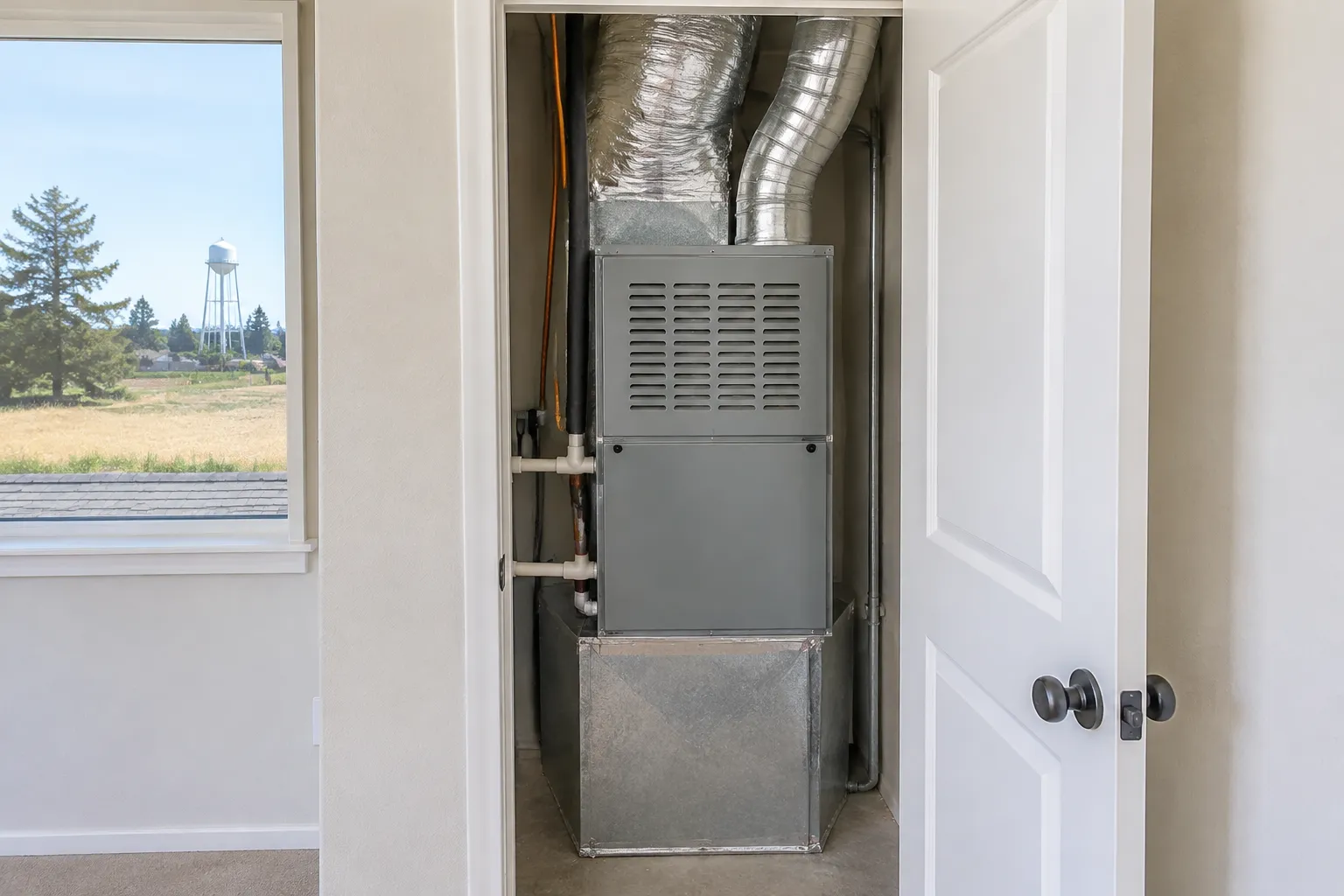
What is shared, and what is not:
| Part | Heating | Cooling |
|---|---|---|
| Blower and ducts | Shared | Shared |
| Filter and vents | Shared | Shared |
| Thermostat | Shared | Shared |
| Furnace burners, igniter, flame sensor | Heating only | Not used |
| Outdoor unit, compressor, refrigerant | Not used (unless heat pump) | Cooling only |
| Condensate drain | High-efficiency furnaces | Yes, from the coil |
A shared part can fail in one season and show up in the other. A weak blower makes rooms hard to heat and hard to cool. A thermostat fault can affect both. If something works one season and not the other, the fault is usually in the parts that are not shared.
Which repairs belong to heating and which to cooling?
Burner, igniter, flame sensor, pressure switch and heat exchanger faults are heating problems. Capacitor, contactor, condenser fan, compressor, refrigerant and evaporator coil faults are cooling problems. Blower motors, ducts and thermostats can show up in either season. Knowing which side you are on helps you describe the problem.
Published national ranges, from the Fixr cost guides (furnace figures from August 2025, cooling figures from January 2026):
Heating side
- Igniter: $96 to $178
- Flame sensor: $68 to $127
- Control board: $390 to $725
- Heat exchanger: $1,346 to $2,673
Cooling side
- Capacitor: $100 to $400
- Refrigerant leak repair: $200 to $1,500
- Compressor: $600 to $3,000 (published guides vary widely)
These are national figures, not Modesto prices. The cost pages for AC repair and furnace repair go into each part.
What if you have a heat pump instead of a furnace?
A heat pump heats and cools with one outdoor unit, so a single repair call covers both seasons. Fixr's published guide puts heat pump repair at an average of $400, with a range of $150 to $650. Parts such as a reversing valve, which switches between heating and cooling, run about $350 to $700.
If the heat pump cools well but does not heat, or the reverse, ask the technician to check the reversing valve and the thermostat settings. Heat pump specifics are on the heat pump repair page. To weigh a heat pump against a furnace and a separate AC, the furnace vs heat pump guide sets out the choice.
Modesto Irrigation District has listed rebates for heat pumps and central AC in the past, but listings conflict. Confirm what is available with MID at (209) 526-7339 before relying on it.
Should one business handle both heating and cooling repairs?
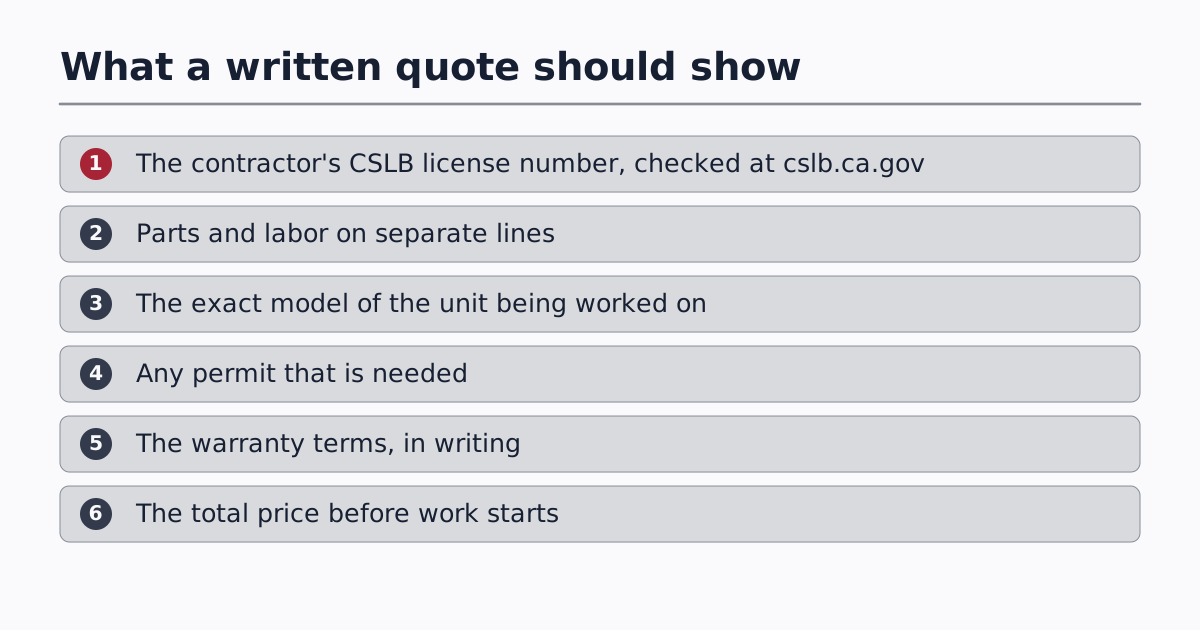
Usually, yes. A business that works on both sides can see how a fault in the blower, ducts or thermostat affects the whole system, and you keep one set of records. California's C-20 classification covers warm-air heating, ventilating and air-conditioning work in one license, so a single CSLB license normally covers both.
When you request quotes, ask which side they are strongest on and how often they work on your brand. If your problem is only heating or only cooling, a business may have a better fit for one. Check any license at cslb.ca.gov. Work of $1,000 or more in labor and materials needs a CSLB license in California, and quotes through this site come from independent local businesses, so the check is yours to make.
You can also ask for a combined inspection if you are paying for one visit anyway. A technician already at the furnace can look at the outdoor unit and the thermostat. The HVAC service plan page covers visits that look at both.
When is heating and cooling repair busiest in Modesto?
Cooling calls peak in summer, and heating calls rise when the first cold snaps hit in autumn and winter. Modesto's July average high is about 95 F in the 1991 to 2020 climate data compiled by Climates to Travel, and from 2017 to 2026 Modesto logged between 12 and 45 days a year at or above 100 F, per Extreme Weather Watch (the 2026 count is incomplete).
A system that has sat idle for months is most likely to fail when first switched on. If you can, test the furnace on a cool evening before the cold arrives, and test the AC on a warm day before summer. A fault found early gets booked when the schedule is open. The same fault found on the hottest or coldest night costs more and takes longer to get fixed.
For winter, the same data shows a January average high of 56.1 F and low of 38.8 F. Still, a cold house at night is a reason to act the same day. Ask for quotes on the price request form and say which season's fault you are seeing.
Is it time to consider a new system instead of repairs?
Consider replacement when the system is near the end of its life and repairs keep coming. Carrier lists 15 to 20 years for both air conditioners and furnaces, and suggests considering replacement after about 10 years for AC and about 15 for a furnace, or when a repair cost approaches 50% of a new system.
Fixr's furnace replacement page lists $2,800 to $7,500 with an average near $4,800, and its 2026 guide puts the average installed central AC near $6,000, with a 3-ton range of $2,500 to $8,000. If one side is old and the other is newer, repairing one and replacing the other later can be reasonable. See the whole-system replacement cost guide and the page on how long an AC lasts.
Questions people ask
How long does heat and air conditioner repair take?
A diagnosis time depends on the fault, and a small fix such as a capacitor or igniter can be done in the same visit. A part on order, a refrigerant leak search or a compressor job usually means a second visit. Ask when you book.
What should I ask before I hire someone for heat and air conditioner repair?
Ask whether they work on both heating and cooling, what the diagnostic fee is and whether it is credited, and whether the quote is written with parts and labor separated. Check the CSLB license at cslb.ca.gov and ask what warranty covers parts and labor.
Do I need to be home for heat and air conditioner repair?
An adult should be home to let the technician in and approve the price before any repair that costs money. The indoor unit, outdoor unit and thermostat all need to be reachable, so clear the way first. Ask how the business confirms the work at the end.
Can I do any of this myself?
Yes, a few things. You can replace the filter, check thermostat settings and batteries, make sure the breaker is on and clear debris from around the outdoor unit. Refrigerant, capacitors, gas parts and wiring belong to a pro, and refrigerant work legally requires EPA Section 608 certification.
Is it cheaper to repair heating and cooling in the same visit?
It can be, since one service call fee covers both, but only if the problems are known in advance. Fixr lists diagnostic fees at $75 to $250. Ask whether a second look at the other side is included or billed separately.
Sources
- Fixr published AC repair cost guide, checked Nov 2026
- Fixr published furnace repair cost guide, checked Nov 2026
- Fixr published heat pump repair guide, checked Nov 2026
- Fixr published HVAC repair cost article, checked Nov 2026
- Carrier, How long do HVAC systems last?
- CSLB, C-20 Warm-Air Heating, Ventilating and Air-Conditioning classification
Last updated